
Non Invasive Tests
Ambulatory Blood Pressure (BP) & ECG Monitoring
Ambulatory Blood Pressure (BP) & ECG Monitoring
Ambulatory Blood Pressure (BP) and ECG Monitoring in Singapore
Ambulatory Blood Pressure (BP) and ECG Monitoring in Singapore
Palpitations that come and go. Dizzy spells without warning. Blood pressure that’s normal in the clinic but spikes at home. These are the situations where a quick test often falls short.
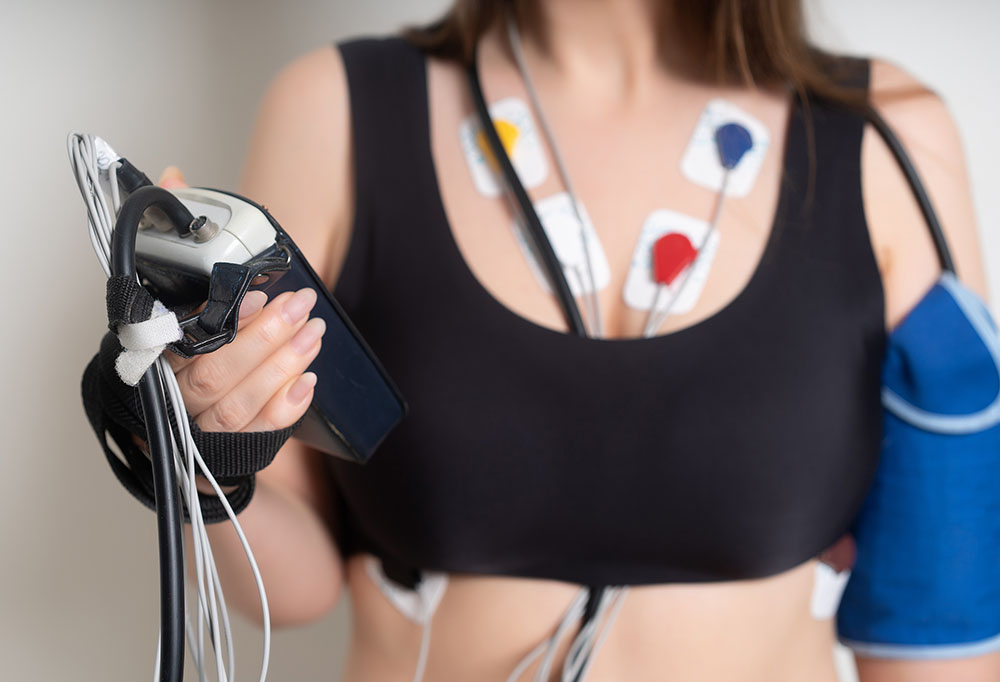
Ambulatory blood pressure (BP) and electrocardiogram (ECG) monitoring use small, wearable devices to record your readings continuously for 24 hours or longer. By tracking your heart and blood pressure throughout daily activities and sleep, these tests give your doctor a more complete picture of your cardiovascular health.
Blood Pressure Monitoring
Blood pressure monitoring measures the force of blood against your artery walls. It can be done at home or in a clinical setting and provides essential information about your cardiovascular health.
Why Blood Pressure Monitoring Is Important
Your blood pressure, or BP, is recorded as two numbers: systolic (when the heart contracts) over diastolic (when the heart relaxes).
- Normal: Around 120/80 mmHg.
- High (Hypertension): 140/90 mmHg or higher, which raises your risk of heart disease, stroke, kidney problems, and vision damage.
- Low (Hypotension): Below 90/60 mmHg. This may be harmless, but in some cases, it can cause dizziness, fainting, or signal an underlying issue.
Both high and low blood pressure often occur without obvious symptoms, so monitoring your BP regularly helps you catch concerns early.
Home Blood Pressure Monitor vs. Clinical Monitoring
There are digital devices you can buy to take your BP at home. This reading reflects your daily levels. At a clinic, measurements are overseen by a healthcare professional and used for diagnosis.
Your doctor may use both at-home and in-clinic BP readings to get a better understanding of your blood pressure and decide if further tests, such as ambulatory monitoring, are needed.
How to Use a Blood Pressure Monitor Correctly
When taking your BP at home, you should:
- Sit quietly for at least five minutes before measuring.
- Keep your feet flat on the floor and your back supported.
- Place the cuff on bare skin, not over clothing.
- Rest your arm on a table at heart level.
- Take two or three readings, one to two minutes apart.
- Log your results, noting the time of day.
- Use the right cuff size.
You shouldn’t drink coffee, smoke, or exercise 30 minutes before taking your BP, and you shouldn’t talk or move throughout the whole process.
Following these steps makes your readings more reliable, helping your doctor see real trends rather than one-off spikes.
Ambulatory Blood Pressure (BP) Monitoring
What Is Ambulatory Blood Pressure Monitoring?
Ambulatory BP monitoring is a non-invasive way to track your blood pressure continuously over 24 hours, while you go about your normal routine.
How Ambulatory BP Monitoring Works
- The device consists of a BP cuff placed on your upper arm and connected by a tube to a small portable recorder worn on a belt or shoulder strap.
- At preset intervals, the cuff automatically inflates and gradually deflates, using the oscillometric technique (detecting blood flow vibrations in the artery) to determine systolic and diastolic pressures.
- Each time it inflates, the device quietly records the pressure readings and stores them in its memory for later analysis.
- You’ll need to keep a diary of daily activities, sleep times, and symptoms, which your doctor can use to interpret the patterns.
- After 24 hours, you’ll return the device to the clinic.
What Can Ambulatory BP Monitoring Detect
Ambulatory BP monitoring can detect:
- Hypertension that doesn’t show in a clinic but appears in daily life.
- Elevated readings only in a medical setting, also known as “white coat” hypertension.
- Whether your BP drops normally while you sleep (“dipping”) or stays high (“non-dipping”), affecting heart risk.
- How much your readings fluctuate across the day.
These patterns help your doctor understand whether your current treatment is working or if it needs to be adjusted.
Who Needs Ambulatory Blood Pressure Monitoring
Your doctor may recommend ambulatory BP monitoring if:
- Clinic readings are inconsistent or borderline.
- You have suspected “white coat” hypertension.
- You have suspected “masked” hypertension (BP is normal in clinic but rises outside of it).
- You’re on blood pressure medication.
- You have other health conditions, specifically diabetes, kidney disease, or sleep apnoea.

Schedule a Heart Health Check
Think you may need ambulatory BP monitoring? Book an assessment at Novena Health Centre today.
Ambulatory ECG Monitoring
What Is Ambulatory ECG Monitoring?
Ambulatory electrocardiogram (ECG) monitoring, also known as Holter monitoring, is a non-invasive test that continuously records your heart’s electrical activity for 24 hours or more — unlike a standard, in-clinic ECG, which only captures a few seconds.
How Ambulatory ECG Monitoring Works
- The device consists of small adhesive electrodes placed on your chest, connected by thin wires to a portable recorder that you wear on a belt, shoulder strap, or in a pouch.
- The electrodes pick up your heart’s electrical signals continuously, capturing every beat during the monitoring period. The recorder stores this data in its memory for later analysis.
- You may be asked to keep a diary of your activities and any symptoms — such as palpitations, dizziness, or chest discomfort — so your doctor can match the timing of events with your heart rhythm.
- After the monitoring period, usually 24 to 48 hours or more, you’ll return the device to the clinic.
What Can Ambulatory ECG Monitoring Detect
Ambulatory ECG monitoring can pick up heart rhythm issues that a standard ECG might miss, including:
- Irregular heartbeats (arrhythmias), such as atrial fibrillation, extra beats, or pauses.
- Silent rhythm changes without noticeable symptoms.
- Dizziness, fainting, or chest discomfort.
- Very slow or fast heart rates.
Who Needs Ambulatory ECG Monitoring
You may need ambulatory ECG monitoring if:
- Your symptoms come and go.
- You’ve had unexplained episodes.
- You have high blood pressure, diabetes, thyroid disease, or structural heart conditions may need closer evaluation.
- You’re on medication for a rhythm disorder or have had a pacemaker or other procedure, this test helps check how well your heart is responding.
If any of these apply to you, your doctor may suggest ambulatory ECG monitoring to build a clearer picture of your heart rhythm and guide the next steps in your care.
Don’t wait for symptoms to persist
Get your heart rhythm checked with ambulatory ECG monitoring at Novena Heart Centre.
Preparing for Ambulatory BP or ECG Monitoring
How to Prepare for Ambulatory Monitoring
To avoid skewed results or equipment issues, you should:
- Bathe or shower beforehand, as the device usually cannot get wet once fitted.
- Wear loose, comfortable clothing, ideally a short-sleeved shirt, to make it easier for the device to be applied and worn.
- Avoid vigorous exercise, stress, or caffeine just before the device is fitted, as these can affect the first readings.
- Continue your usual activities, but avoid contact sports, swimming, or anything that could damage the device.
- Do not tamper with the device or change its position.
- Keep a diary of your activities, sleep times, symptoms, and when you take medication (if instructed), so your doctor can match events to the recordings.
During Monitoring
- When wearing a BP monitor, keep your arm still and at chest level when the cuff inflates.
- Sleep as normally as possible, but avoid lying directly on the arm with the device.
- Contact the clinic promptly if you notice discomfort, skin irritation, or equipment malfunction.
What to Do After Ambulatory Monitoring
When you come back to the clinic to return the device, let your care team know if you experienced any problems during monitoring. Bring along your activity and symptom diary, too.
You can usually resume all regular activities after removing the device.
Understanding Your Monitoring Results
When analysing your monitoring results, your doctor will look at:
- Your average daytime and nighttime readings.
- Your BP during sleep.
- How much it fluctuated across the day.
All of these, and other findings, will be discussed with you at your follow-up appointment. Depending on your BP monitoring results, your doctor may:
- Adjust or start medication.
- Suggest lifestyle changes to improve heart health.
- Recommend further investigations if needed.
Book Ambulatory Monitoring in Singapore
At Novena Heart Centre, your care is guided by cardiologists with subspecialties in arrhythmia and hypertension. With decades of combined experience and training at various centres worldwide, our team ensures your ambulatory BP and ECG monitoring results are carefully interpreted in the context of your overall heart health.
FAQs on Ambulatory Monitoring in Singapore
How reliable is an ambulatory BP monitor compared to a clinic test?
Ambulatory BP monitoring provides a more comprehensive look at your heart health because it records readings over 24 hours in your usual environment, reducing “white coat” effects seen in clinics.
What does it feel like to wear an ambulatory ECG monitor?
It feels like having small stickers (electrodes) on your chest, connected to a light device you carry. Most people find it unobtrusive after a short while.
How long do I need to wear the ambulatory monitoring device?
Typically 24 to 48 hours, though some cases require up to a week or longer, depending on your doctor’s instructions.
Can I continue my normal activities while being monitored?
Yes, you can continue your daily routine, but avoid getting the device wet or damaging it. Also, stay still during BP cuff inflations and don’t tamper with electrodes.
Unsure which test you need?
Share your symptoms with us and our cardiology team will recommend the most suitable non-invasive test.
Common reasons for testing
- Chest pain / tightness
- Irregular heartbeat / palpitations
- Fainting or giddiness
- Breathlessness on exertion
- Pre-operative / pre-procedure cardiac screening
Schedule A Heart Health Check Today
Your heart works hard for you—make sure it’s in good shape. A quick check-up today could help prevent serious problems tomorrow.
-
Monday to Friday
8.00 am to 5:00 pm
-
Saturday
8:30 am to 12:30 pm
-
Sunday
Closed
-
Monday to Friday
8.00 am to 5:00 pm
-
Saturday
8:30 am to 12:30 pm
-
Sunday
Closed
-
Monday to Friday
8.00 am to 5:00 pm
-
Saturday & Sunday
Closed
-
Monday to Friday
8.00 am to 5:00 pm
-
Saturday
8:30 am to 12:30 pm
-
Sunday
Closed
