
Non Invasive Tests
CIMT Ultrasound Test
Carotid Intima-Media Thickness (CIMT) Test in Singapore
You may feel perfectly well and still be at risk of heart disease or stroke. A carotid intima-media thickness (CIMT) test reveals underlying conditions that you may have and helps your doctor guide you towards a plan that improves your overall health and quality of life.
What Is a CIMT Test?
The Carotid Intima-Media Thickness (CIMT) test (or “scan”) is a non-invasive ultrasound assessment used to measure the thickness of the two innermost layers of the carotid artery wall: the intima and media. These arteries, located on either side of the neck, supply blood to the brain.
When Is a CIMT Test Recommended
Your doctor may recommend a CIMT test if:
- You have risk factors such as high cholesterol, high blood pressure, diabetes, or a family history of early heart disease.
- Your heart disease risk is unclear after routine screening.
- You’re already on treatment (like statins), and your doctor wants to monitor vascular response over time.
This test is not used for diagnosing acute or emergency conditions.
Schedule a Heart Health Check

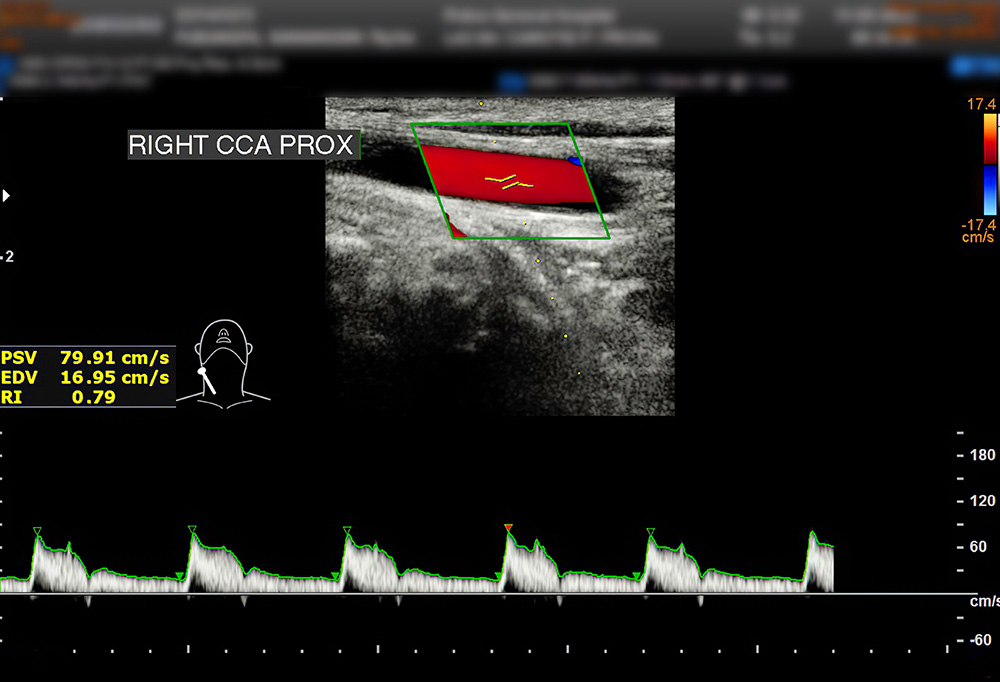
What Is a Carotid Ultrasound?
A carotid ultrasound is a non-invasive imaging test that uses high-frequency sound waves to create pictures of the carotid arteries in your neck. Through this, your doctor can see whether there are narrowed areas, blockages, or plaque build-up inside the artery walls. Detecting these changes early is important because reduced blood flow to the brain can increase the risk of stroke.
Unlike procedures that involve injections or radiation, a carotid ultrasound is painless and widely used as a first-line test to assess blood vessel health. It can also be used to monitor patients who already have known cardiovascular disease or have undergone treatment, such as surgery or stenting.
Difference Between a CIMT Test and a Carotid Ultrasound
Although both tests use ultrasound and examine the same arteries, they serve different purposes:
- A CIMT test evaluates the thickness of artery walls to detect early signs of vascular ageing or atherosclerosis.
- A carotid ultrasound focuses on identifying existing blockages or narrowing that may already be affecting blood flow.
In simple terms, a CIMT test helps assess future risk, while a carotid ultrasound helps diagnose current problems.
Accuracy of Carotid Ultrasound in Detecting Blockages
Carotid ultrasound provides a detailed view of both the artery structure and blood flow. It combines:
- B-mode ultrasound, which shows the structure of the artery.
- Doppler ultrasound, which measures how fast and smoothly blood is flowing.
This combination makes it a reliable and widely used test for detecting significant narrowing or plaque that may increase stroke risk.
CIMT Scan Procedure
Preparing For the CIMT Scan
There is no special preparation required. You may eat, drink, and take your regular medications unless instructed otherwise.
To help with the procedure:
- Wear a loose-fitting top or one with an open neckline.
- Avoid applying lotions, creams, or powders on your neck on the day of the scan.
- Bring previous cardiovascular test results to provide helpful context for interpretation.
What to Expect During the Procedure
Here’s how the procedure typically goes:
- Gel Application: A clear gel is applied to your neck so the probe can glide on your skin.
- Imaging:The probe is moved gently along the artery to capture ultrasound images.
- Measurement: Special software calculates the thickness of the artery walls.
- Interpretation: Your doctor reviews the results to determine whether there is early arterial thickening or plaque.
Post-Test Care and Follow-Up
Your doctor will review the results with you, explaining what the measurements mean in the context of your overall health. If the artery walls are thicker than expected, your doctor may recommend certain lifestyle changes, medication, or further monitoring to lower your cardiovascular risk.
Understand Results After the CIMT Scan
Your CIMT results show the thickness of the inner walls of your carotid arteries, usually in millimetres (mm). This value is compared to normal ranges based on age and gender.
- Normal thickness suggests healthy arteries for your age.
- Increased thickness may indicate early signs of atherosclerosis (plaque buildup), even if you have no symptoms.
The CIMT test does not diagnose blockages but helps assess long-term cardiovascular risk. Your doctor will consider your result along with other risk factors to determine the best course of action.
Benefits of CIMT Test
Detection of Atherosclerosis
One of the key benefits of the CIMT test is its ability to detect subclinical atherosclerosis: plaque buildup in the artery walls that has not yet caused symptoms. This allows your doctor to identify vascular changes at an early stage, before more serious conditions like heart attacks or strokes occur.
Assess Heart Disease Risk
CIMT measurements provide valuable insight into your individual risk for cardiovascular disease, beyond standard blood tests or physical exams. By evaluating arterial wall thickness, the test offers a clearer picture of how your arteries are ageing and whether you may benefit from early preventive care.
Guide Treatment of Hyperlipidemia
For patients with hyperlipidemia (high cholesterol), the CIMT test can help guide treatment decisions. It allows your doctor to monitor how well your current therapy — such as statins or lifestyle changes — is working, and whether adjustments are needed. It also supports more targeted treatment planning, especially when blood test results alone are inconclusive.
Book a CIMT Test in Singapore
If you have risk factors like high cholesterol, hypertension, or a family history of heart disease, a CIMT test can provide the clarity you need. At Novena Heart Centre, our team ensures you understand your results and your options.
FAQs on CIMT Tests in Singapore
Why would I need a CIMT test?
It’s commonly recommended for people with risk factors such as high cholesterol, high blood pressure, diabetes, or a family history of cardiovascular disease. This is because the test helps detect early signs of atherosclerosis, even before symptoms appear.
Is the CIMT test safe and painless?
How do I prepare before going for a carotid ultrasound?
You don’t need to do anything special to prepare for a carotid ultrasound. You can eat, drink, and take your medications as usual. Just wear a loose-fitting top or one with an open neckline, and avoid applying lotion or cream on your neck.
What can my doctor learn from the results of a CIMT scan?
From a CIMT scan, your doctor can learn if the walls of your carotid arteries are thicker than normal. Thicker artery walls may suggest early atherosclerosis and a higher risk of cardiovascular disease. This helps your doctor decide if you need lifestyle changes, medication, or further testing.
How often should CIMT be repeated?
You can get a CIMT scan every one to three years, depending on your risk factors and previous results. Your doctor will recommend the right timing based on your health profile and whether you’re being monitored for changes in arterial health.
Unsure which test you need?
Share your symptoms with us and our cardiology team will recommend the most suitable non-invasive test.
Common reasons for testing
- Chest pain / tightness
- Irregular heartbeat / palpitations
- Fainting or giddiness
- Breathlessness on exertion
- Pre-operative / pre-procedure cardiac screening
Schedule A Heart Health Check Today
Your heart works hard for you—make sure it’s in good shape. A quick check-up today could help prevent serious problems tomorrow.
-
Monday to Friday
8.00 am to 5:00 pm
-
Saturday
8:30 am to 12:30 pm
-
Sunday
Closed
-
Monday to Friday
8.00 am to 5:00 pm
-
Saturday
8:30 am to 12:30 pm
-
Sunday
Closed
-
Monday to Friday
8.00 am to 5:00 pm
-
Saturday & Sunday
Closed
-
Monday to Friday
8.00 am to 5:00 pm
-
Saturday
8:30 am to 12:30 pm
-
Sunday
Closed
