
Our Services
Heart Stent & Bypass Surgery
Heart Stent & Bypass Surgery in Singapore
Not every heart condition requires open surgery. In some cases, a minimally invasive stent may be enough to keep your arteries open. In others, a bypass procedure offers a more durable solution. Knowing the difference between the two can prepare you for discussions with your cardiologist and give you clarity about the path ahead.
Heart Stent Surgery
What Is Heart Stent Surgery
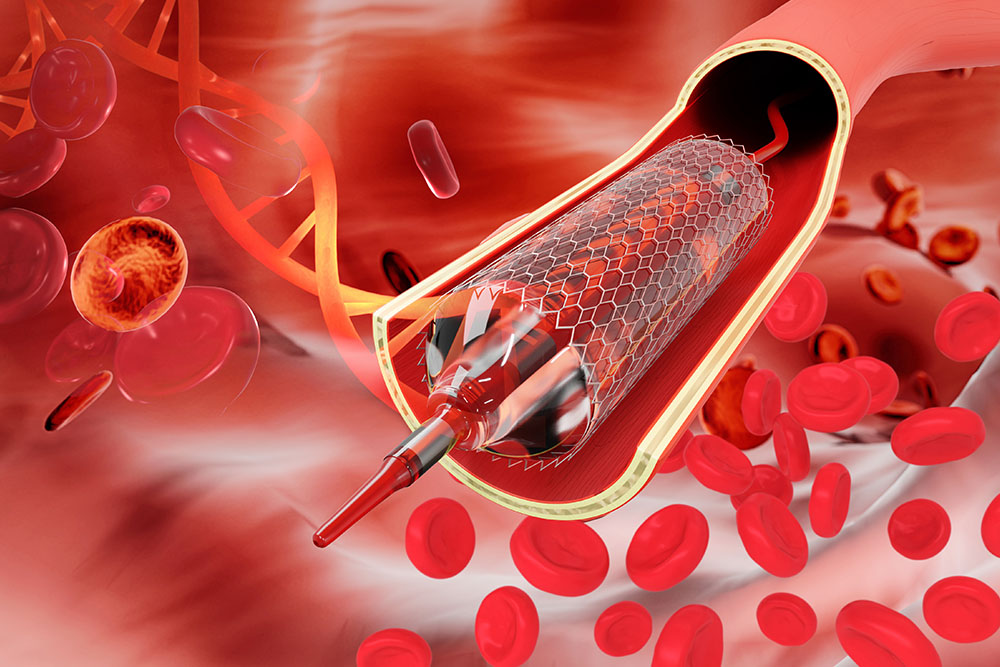
Heart stent surgery, also known as angioplasty, is a minimally invasive procedure used to open narrowed or blocked coronary arteries.
A stent is a small, metal mesh tube inserted into the artery to keep it open and restore proper blood flow to the heart muscle.
Your doctor may recommend this procedure if fatty deposits (plaque) have built up in your arteries, a condition known as coronary artery disease (CAD), which can restrict or block blood flow and increase the risk of a heart attack.
When a Stent Procedure Is Recommended
Your doctor may recommend a stent if you:
- Have chest pain (angina) due to narrowed coronary arteries.
- Have suffered a heart attack and require immediate restoration of blood flow.
- Are not suitable for open-heart surgery due to age, other medical conditions, or certain anatomical factors.
What to Expect During a Stent Procedure
Before proceeding with heart stent surgery, your care team will explain the whole process to you. Here’s an overview of what that will look like:
- You’ll receive medication to help you relax while remaining conscious throughout the procedure.
- Your doctor will guide a thin tube through your arteries to reach the blocked area in your heart.
- The blockage is cleared by inflating a small balloon, and a stent is inserted to keep the artery open.
- Once the stent is in place, the catheter is removed. You’ll rest in a recovery area, where your heart and vital signs will be observed.
- Recovery is usually quick. You’ll receive clear instructions for medication, follow-up, and when to resume daily activities.
Benefits and Risks of Stent Surgery
Stent surgery is a well-established treatment for blocked coronary arteries, providing:
- Quick restoration of blood flow to the heart.
- Relief from chest pain (angina) and related symptoms.
- Lower risk of heart attack when performed promptly.
- Minimally invasive approach, which means a smaller incision, less discomfort, and faster healing.
- Short hospital stay, often allowing discharge within a day.
As with any medical procedure, there are potential risks to consider. These include:
- Bleeding or bruising at the catheter insertion site.
- Blood clots forming in the stent, which may require long-term medication.
- Restenosis, or the re-narrowing of the treated artery.
- Heart attack, stroke, or artery damage, although these are rare.
- Allergic reactions to contrast dye or materials used during the procedure.
Your doctor will assess your individual risk profile and help you weigh these factors before proceeding.
Schedule a Heart Health Check
Ready to take the next step? Book a consultation at Novena Heart Centre to find out if stent surgery is the right treatment for you.

Heart Bypass Surgery
What Is Heart Bypass Surgery
Heart bypass surgery, also known as coronary artery bypass grafting (CABG), is a major operation used to treat severe CAD. This occurs when arteries that supply blood to your heart become narrowed or blocked.
In this procedure, your surgeon creates a new route, or “bypass”, for blood to flow around the blocked section. This is done by grafting a healthy blood vessel taken from your leg, arm, or chest to the affected coronary artery.
What to Expect Before and During Heart Bypass Surgery
- You’ll go through a full medical assessment, including blood tests, heart scans, and other imaging to guide your surgical plan.
- Your doctor and care team will explain the procedure and answer any questions you have.
- You’ll need to fast before the operation.
- General anaesthesia will be administered, so you’ll be fully asleep during surgery.
- The surgeon will make an incision in your chest to access your heart.
- Your heart may be temporarily stopped, and a heart-lung machine will take over your circulation during the procedure.
- A healthy blood vessel — often taken from your leg, arm, or chest — will be grafted onto the blocked artery to bypass it.
- If multiple blockages are present, more than one graft may be needed.
Recovery After Heart Bypass Surgery
After the heart bypass surgery, you’ll be moved to the intensive care unit (ICU), where your care team will closely monitor your heart rhythm, breathing, and other vital signs. It’s normal to have drainage tubes and IV lines in place to help manage fluids and deliver medications.
Most patients spend five to seven days in the hospital. During this time, your care team supports you in starting gentle movements — sitting up, standing, and walking short distances — as you recover.
Recovery At Home
Full recovery takes about six to 12 weeks, depending on your health and how many bypasses you’ve had. During this time, you’ll be guided on:
- How to care for your wounds, and what to look out for in case of infection.
- How and when to take your medications, especially those for blood pressure, blood thinning, and healing.
- What activities to avoid or resume, including walking, lifting, driving, and returning to work.
- Whether to join a cardiac rehab programme, which helps rebuild strength and confidence safely.
Your doctor will also arrange follow-up appointments to track your progress and adjust your recovery plan if needed.
Schedule a Heart Health Check
Considering bypass surgery? Book an appointment at Novena Heart Centre to discuss whether CABG is the right treatment for your condition.
Difference Between Heart Bypass Surgery and Stent Surgery
Here, at a glance, you can see just how the two procedures differ.
| Feature | Heart Stent Surgery | Heart Bypass Surgery |
|---|---|---|
|
Type of Procedure
|
Minimally invasive
|
Open-heart surgery
|
|
How It Works
|
A stent is inserted to open the blocked artery
|
A graft creates a new path around blocked arteries
|
|
Invasiveness
|
Low (catheter-based)
|
High (Surgical incision in the chest)
|
|
Hospital Stay |
Usually same-day discharge
|
Five to seven days
|
|
Recovery Time
|
One to two weeks
|
Six to twelve weeks
|
|
Best Suited For
|
One or two straightforward blockages
|
Multiple or complex blockages; patients with diabetes
|
|
Typical Use Case
|
Quick restoration of blood flow with minimal downtime
|
Long-term treatment for severe or widespread coronary disease
|
Cost of Heart Stent Surgery in Singapore
Factors Affecting Heart Stent Surgery Cost
Several factors influence how much a stent procedure may cost, including:
- Number of stents used
- Type of stent (drug-eluting, bare-metal, bioresorbable)
- Procedure complexity (location of blockage, imaging tools like IVUS or FFR)
- Hospital type and ward class (private vs public, single or shared room)
- Specialist and surgeon fees
- Pre- and post-surgery tests, medication, and care
- Unexpected complications or extended stay
- Insurance coverage, subsidies, and MediSave use
Cost of Heart Bypass Surgery in Singapore
Factors Affecting Heart Bypass Surgery Cost
The cost of heart bypass surgery in Singapore varies significantly based on medical, logistical, and administrative factors. While some factors, like the hospital you choose, are within your control, others depend on your specific heart condition and surgical needs. Common cost drivers include:
- Number of bypass grafts required
- Surgical complexity (standard vs complex or combined procedures)
- Use of advanced techniques (e.g. off-pump surgery, minimally invasive approaches)
- Ward class (single, double, or shared room)
- Surgeon’s and specialist team fees
- Length of hospital stay, including ICU
- Pre- and post-operative care (diagnostic tests, medications, rehabilitation)
- Insurance, MediSave, and subsidy coverage
- Unexpected complications or re-intervention needs
MediSave and Insurance Coverage
In Singapore, angioplasty and CABG surgeries are partly covered by MediSave, MediShield Life, and Integrated Shield Plans (IPs). The amount you can claim depends on the procedure, hospital type, and your insurance plan.
MediSave
- Can be used for both angioplasty and bypass surgery.
- Withdrawal limits are typically up to $11,000 for angioplasty and $25,000 for bypass, depending on complexity.
- These amounts often cover most or all bills in subsidised public hospital wards.
MediShield Life
- Covers both procedures with fixed payouts.
- Payouts are around $2,000 to $7,500 for angioplasty and about $7,300 for bypass surgery, with an annual claim limit of $150,000.
Integrated Shield Plans (IPs)
- Provide additional coverage on top of MediShield Life, including private hospitals and higher ward classes.
- Coverage can go up to $1 to $2 million per year, depending on the policy.
- Patients with IPs may have most costs covered, apart from deductibles and co-payments.
Book a Heart Stent or Bypass Surgery in Singapore
Deciding on a stent procedure or bypass surgery is a major step, but it can also be the one that restores confidence in your health and addresses the cause of your symptoms.
At Novena Heart Centre, our cardiologists will walk you through the options and ensure you understand the path forward for your heart. Book your procedure at Novena Heart Centre to get started.
FAQs on Heart Stent and Bypass Surgery in Singapore
Is stent surgery safer than bypass surgery?
Stent surgery is less invasive and carries a lower immediate risk, but bypass surgery may be more effective for patients with multiple or complex blockages.
How long does a heart stent last?
A stent is designed to be permanent, though new blockages can form in other parts of the artery over time.
Will I need to take medication after having a stent procedure?
Yes, you’ll need antiplatelet medication to prevent blood clots from forming around the stent.
Can heart stent surgery be done without general anaesthesia?
Yes, stent procedures are typically done under local anaesthesia with sedation, not general anaesthesia.
Are there risks of complications with stent surgery?
Risks include bleeding, infection, allergic reaction to dye, blood clots, or re-narrowing of the artery, though serious complications are uncommon.
How effective is bypass surgery in treating blocked arteries?
Bypass surgery is effective, especially for multiple or severe blockages, and often provides long-term relief of symptoms.
What’s the difference between minimally invasive bypass surgery and traditional bypass surgery?
What should I expect during recovery after heart bypass surgery?
You’ll start with gentle movement in the hospital, then gradually increase activity over six to 12 weeks with guidance from your care team.
How long will I stay in the hospital after heart bypass surgery?
Most patients stay five to seven days, depending on recovery and whether complications arise.
How soon can I return to work or normal activities after a stent or bypass surgery?
After a stent, many return to normal activities within a week; after bypass surgery, it usually takes six to 12 weeks.
What lifestyle changes should I make after undergoing a stent or bypass surgery?
Adopt a heart-healthy diet, exercise regularly, stop smoking, manage stress, and take prescribed medications consistently.
Can blocked arteries come back after stent or bypass surgery?
Unsure which procedure you need?
Share your symptoms or test results with us and our interventional cardiologist will recommend the safest and most appropriate treatment.
Common reasons
for referral
- Chest pain
- Abnormal treadmill / ECG / CT scan
- Known coronary artery disease
- Post-CABG graft problems
Schedule A Heart Health Check Today
Your heart works hard for you—make sure it’s in good shape. A quick check-up today could help prevent serious problems tomorrow.
-
Monday to Friday
8.00 am to 5:00 pm
-
Saturday
8:30 am to 12:30 pm
-
Sunday
Closed
-
Monday to Friday
8.00 am to 5:00 pm
-
Saturday
8:30 am to 12:30 pm
-
Sunday
Closed
-
Monday to Friday
8.00 am to 5:00 pm
-
Saturday & Sunday
Closed
-
Monday to Friday
8.00 am to 5:00 pm
-
Saturday
8:30 am to 12:30 pm
-
Sunday
Closed
