
Coronary artery stenting is a common and often lifesaving procedure used to treat coronary artery disease (also known as ischaemic heart disease), a condition that affects millions of people around the world. After cancer and pneumonia, ischaemic heart disease is the third leading cause of death in Singapore.
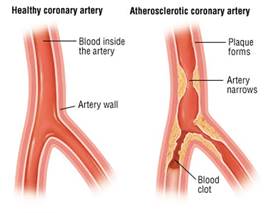
Coronary artery disease occurs when the arteries that supply blood to the heart muscle become narrowed or blocked by a build-up of plaque—a mixture of fat, cholesterol, and other substances. Left untreated, this can lead to chest pain (angina), heart attacks (myocardial infarction), and even sudden cardiac death. When a coronary angiogram reveals significant narrowing of the arteries, percutaneous coronary intervention with stenting may be recommended to quickly restore blood flow to the heart muscle.
What Is a Coronary Artery Stent?
A coronary artery stent is a small, mesh-like tube made of metal (usually stainless steel or cobalt-chromium alloy) or sometimes a biodegradable material. It is inserted into a narrowed or blocked coronary artery to restore proper blood flow to the heart. Most modern stents are drug-eluting stents (DES), which slowly release medication to help prevent the artery from narrowing again (restenosis). Older versions, known as bare-metal stents (BMS), do not have this drug coating and are rarely used in Singapore nowadays.

The Stenting Procedure: What to Expect
Coronary artery stenting (sometimes referred to as angioplasty) is a minimally invasive procedure typically performed as part of a percutaneous coronary intervention (PCI).
Here’s how it works:
- Preparation: The patient is usually awake but may be slightly sedated if necessary. A local anaesthetic is applied to the injection site at the wrist or groin area.
- Catheter Insertion: A thin, flexible tube called a catheter is inserted into the blood vessel at the wrist or groin and guided to the heart using X-ray imaging.

- Coronary Angiography: The catheter is manipulated into the blood vessels of the heart and a coloured dye (contrast) is injected while X-ray imaging is used to assess the blood vessels to detect coronary artery disease. This process usually takes between 15 to 30 minutes. Depending on the findings of the diagnostic coronary angiogram, either medical therapy, coronary artery angioplasty/stenting, or bypass surgery would be recommended.
- Balloon Angioplasty: If percutaneous coronary intervention is required, a wire is passed through the diseased artery and a small balloon at the tip of the catheter is inflated at the site of the blockage to open the artery.
- Stent Placement: A coronary stent, mounted on a balloon, is positioned at the site of the blockage. The stent expands as the balloon inflates and remains in place after the balloon is deflated and removed. Coronary angioplasty and stenting usually takes an additional 30 minutes to 2 hours, depending on the complexity of the blockages.

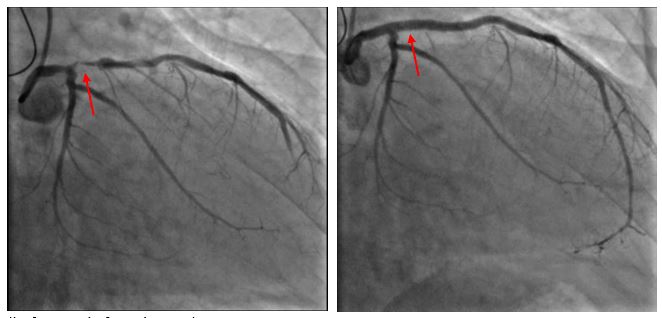
(before and after pictures)
- Recovery: Patients often stay overnight in the hospital for monitoring and then return to normal activities within a week.
Benefits of Coronary Stenting
- Improved blood flow to the heart muscle
- Relief from angina (chest pain)
- Reduced risk of heart attack
- Shorter recovery time compared to open-heart surgery
- Minimally invasive approach with fewer complications
Risks and Complications
As with any medical procedure, coronary artery stenting carries some risks, including:
- Blood clots forming inside the stent (thrombosis) that can result in a heart attack and even death
- Artery re-narrowing (restenosis) over time
- Bleeding at the catheter insertion site; in rare cases, it may affect other organs such as the brain or gastrointestinal tract
- Allergic reactions to contrast dye or medications
- Vascular complications (damage to the artery or heart)
To reduce the risk of complications, patients are usually prescribed antiplatelet medications like aspirin, clopidogrel, or ticagrelor after the procedure.
Long-Term Outlook
While coronary artery stenting can significantly improve symptoms and quality of life, it is most effective when combined with long-term management of risk factors and lifestyle changes such as:
- Eating a heart-healthy diet

- Exercising regularly

- Quitting smoking

- Managing conditions like high blood pressure, diabetes, and high cholesterol
Regular follow-ups with a cardiologist are essential to monitor heart health and prevent future issues.
Conclusion
Coronary artery stenting has revolutionised the treatment of coronary artery disease, offering a safer and quicker alternative to open-heart surgery for many patients.
With the right combination of treatment, lifestyle changes, and regular follow-up care, many patients with coronary artery disease can enjoy active, healthy, and fulfilling lives.
Dr Benji Lim
Consultant Interventional Cardiologist
Novena Heart Centre – Touching Lives With Care
